Why Copper Piping Develops Pinhole Leaks in Tustin
For decades, copper was regarded as the premier lifetime material for residential plumbing supply lines. However, thousands of property owners throughout Tustin and greater Orange County have experienced an epidemic of pinhole leak repair Tustin emergencies. A pinhole leak is a microscopic pit that perforates completely through the wall of a copper tube. While tiny in diameter, a pinhole under 60 PSI of municipal pressure can discharge hundreds of gallons of water per day inside wall studs or beneath a concrete foundation.
The primary catalyst behind copper pinhole leak Tustin failures is a complex chemical reaction involving local municipal water composition, hydraulic turbulence, and metallurgy. Orange County water contains elevated levels of dissolved minerals, calcium carbonate, and chloramine disinfectants. When hard water flows through copper tubing, microscopic galvanic corrosion cells form along the interior pipe wall. Over twenty to thirty years, this localized pitting oxidation eats outward until a pinhole breaches the exterior surface, causing an active copper pipe leak repair Tustin crisis.
Signs of Copper Pinhole Leaks in Walls and Beneath Slabs
Because pinholes start as tiny weeping fissures before expanding into high-velocity sprays, spotting early warning symptoms prevents massive interior restoration expenses:
- Greenish-Blue Oxidation Crust: Verdigris or turquoise crust forming on exposed copper pipes near water heaters, under sink vanities, or in garage access panels indicates slow weeping from microscopic pits.
- Tiny Wall Bubbles or Discoloration: Small dime-sized blisters in drywall paint, damp baseboards, or peeling wallpaper in bathrooms and laundry rooms.
- Sound of Faint Water Spray: A persistent whispering or fine spray hiss heard behind bedroom drywall when all plumbing fixtures are closed.
- Under-Slab Efflorescence: When pinholes develop in copper lines embedded below concrete, moisture vapor migrates through the porous slab, leaving chalky white mineral salt crusts on tile grout lines. Learn more about foundation diagnostics on our slab leak repair in Tustin homepage.
Repair Options: Spot Repair vs. Section Replacement vs. Repiping
Choosing the correct engineering approach depends on the general structural condition of your copper supply network:
1. Surgical In-Place Spot Repair
If an isolated pinhole occurs due to external physical damage (such as a drywall screw penetration or abrasive contact against a steel framing bracket), cutting out the damaged three-inch section and soldering a lead-free copper slip coupling is practical, fast, and cost-effective.
2. Branch Section Replacement
When multiple pinholes appear along a single isolated plumbing branch—such as an exposed hot water manifold supplying a master bath—our technicians cut out the entire degraded copper run and install a new section of Type L copper or cross-linked polyethylene. Learn about bypassing buried lines on our slab leak reroute page.
3. Comprehensive Whole-House Repipe
When a homeowner faces repeat pinhole leaks Tustin plumbers recognize that localized patching is no longer viable. Pitting corrosion does not occur in isolation; if one section of copper has thinned to the point of perforation, the remaining pipes throughout your walls and slab are microscopically thinned as well. Upgrading your home with a complete whole-house repiping replacement using modern PEX-a permanently stops the cycle and safeguards your investment.
Water Chemistry and Velocity Factors in Orange County
Plumbing engineers identify three critical environmental accelerators in Tustin:
- Water Velocity and Undersized Tubing: Water flowing at speeds exceeding 5 to 8 feet per second scours the protective copper oxide layer from the pipe interior, especially around 90-degree elbows and tees.
- Water pH Fluctuations: Slight shifts in municipal water pH can destabilize the internal patina, making the bare copper vulnerable to chloramine attack.
- Uninsulated Slab Contact: Subterranean copper lines laid directly against concrete without protective polyethylene sleeves suffer exterior chemical corrosion from alkaline wet concrete.
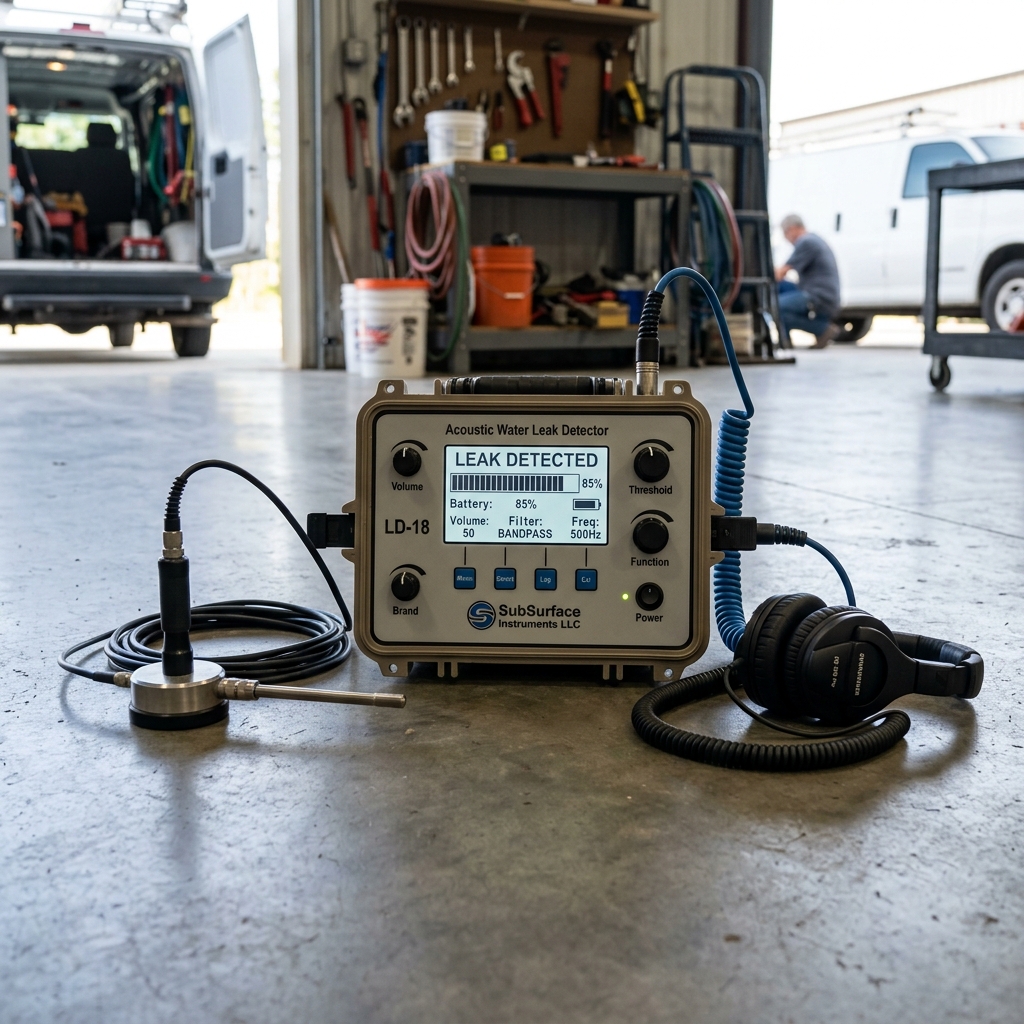
To detect whether an active pinhole is hiding beneath your foundation, schedule an electronic diagnostic evaluation through our slab leak detection service.
Frequently Asked Questions About Copper Pinhole Leaks
Can I use a rubber clamp or epoxy putty to fix a pinhole leak?
Temporary mechanical pipe repair clamps or epoxy pastes should only be used as emergency stopgap measures for a few hours until a licensed plumber arrives. Under continuous 60 PSI domestic water pressure, rubber clamps degrade and epoxy can blow out, causing sudden severe room flooding.
Why do hot water copper pipes develop pinholes faster than cold pipes?
Elevated water temperatures accelerate electrochemical oxidation rates. Combined with frequent expansion and contraction against structural framing, hot water lines deteriorate significantly faster than cold supply lines.
Will installing a water softener prevent pinhole leaks?
A standard salt-based water softener removes calcium and magnesium to prevent hardness scaling, but it does not eliminate chloramines or electrical conductivity. In some instances, overly softened water can actually accelerate pitting corrosion in aged copper pipes.